The evolution of virtual concerts has transformed how fans engage with artists, music, and immersive digital worlds. From album-inspired interactive environments to fully social VR festivals, the digital stage is expanding rapidly. When comparing Madeonverse vs VRChat, the difference lies not just in features, but in philosophy.
One is an artist-curated digital universe built around creative vision. The other is a massive social ecosystem driven by community events and user-generated worlds. Let’s explore both platforms in depth.
Understanding Madeonverse
Madeonverse is a digital interactive experience created by Madeon as an extension of his artistic identity, especially inspired by his album Good Faith. It is not simply a virtual concert space — it is a conceptual, narrative-driven world.
Core Concept Behind Madeonverse
Madeonverse was designed to:
- Expand the emotional themes of the album
- Provide a visually synchronised music journey
- Allow fans to explore environments tied to sound
- Offer a curated digital storytelling experience
Unlike traditional virtual concert platforms, Madeonverse feels like stepping inside a living art installation.
Key Features of Madeonverse
1. Artist-Controlled Environment
Everything inside the the Madeonverse reflects Madeon’s creative direction. Visuals, color palettes, audio layers, and interactive elements are carefully crafted to maintain artistic integrity.
2. Browser-Based Accessibility
No heavy installations. Users can access it directly through a web browser, making it easy for global fans to experience.
3. Immersive Audio-Visual Synchronisation
Music and visuals are tightly synchronized, creating a cinematic, emotional atmosphere.
4. Limited Social Interaction
It focuses primarily on solo exploration rather than community gatherings.
Understanding VRChat
In contrast, VRChat is a fully social virtual platform that allows users to create worlds, host events, and interact in real time. It has become a hub for virtual clubs, music festivals, DJ performances, and fan communities.
Core Concept Behind VRChat
VRChat is built around:
- User-generated content
- Real-time interaction
- Creative freedom
- Community-driven events
It is less about one artist’s vision and more about collaborative digital culture.
Key Features of VRChat for Music Experiences
1. Live Virtual Concerts
Artists and DJs host real-time shows where audiences can dance, chat, and react live.
2. Custom Avatars
Users can design personalized avatars, adding a layer of identity expression.
3. VR and Desktop Compatibility
While best experienced with a VR headset, VRChat also supports desktop users.
4. Community-Created Venues
From underground clubs to futuristic festival stages, environments are built by users.
Detailed Comparison: Madeonverse vs VRChat
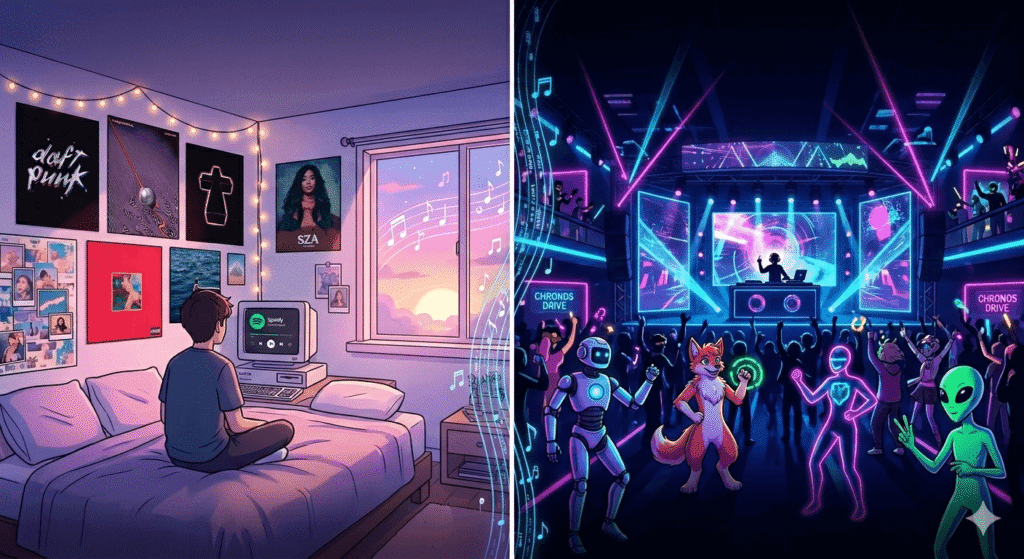
1. Artistic Control vs Creative Freedom
Madeonverse
- Fully controlled by the artist
- Consistent visual identity
- Narrative-focused
VRChat
- Open creation system
- Quality varies by creator
- Infinite creative potential
Conclusion:
Choose Madeonverse for artistic purity. Choose VRChat for creative diversity.
2. Immersion Level
Madeonverse
- Deep emotional immersion
- Feels like a playable album
- Strong visual storytelling
VRChat
- Social immersion
- Real-time crowd energy
- VR enhances physical presence
Verdict:
Madeonverse delivers cinematic immersion. VRChat delivers social immersion.
3. Social Interaction & Community
Madeonverse
- Minimal interaction
- Personal, reflective experience
VRChat
- Voice chat and group engagement
- Live audience reactions
- Music communities and recurring events
Winner: VRChat dominates in social connectivity.
4. Accessibility & Technical Requirements
| Feature | Madeonverse | VRChat |
|---|---|---|
| Browser Access | Yes | No |
| VR Required | No | Optional |
| Download Needed | No | Yes |
| Hardware Demand | Low | Medium to High |
Madeonverse is easier for casual users. VRChat offers deeper immersion but requires more setup.
5. Longevity & Replay Value
- Designed around a specific album era
- Limited replay once explored
VRChat
- Ongoing events
- Constantly updated worlds
- Endless social possibilities
VRChat provides stronger long-term engagement.
User Experience Scenarios
Scenario 1: The Artistic Explorer
If you love album storytelling and want a visually synchronized music journey, Madeonverse is ideal.
Scenario 2: The Social Festival Fan
If you enjoy dancing with virtual crowds and attending DJ sets, VRChat is better suited.
Scenario 3: The VR Enthusiast
VRChat with a headset delivers a powerful sense of presence.
Scenario 4: The Casual Listener
Madeonverse offers quick and easy access without technical complexity.
Pros and Cons Overview
Madeonverse
Pros
- High production quality
- Artist-driven storytelling
- Easy access
Cons
- Limited social features
- Less replay value
- Restricted to one artistic universe
VRChat
Pros
- Strong community interaction
- Endless creative possibilities
- Frequent live music events
Cons
- Inconsistent quality across worlds
- Requires download
- VR hardware recommended for best experience
Future of Virtual Music Platforms
Madeonverse represents the future of artist-controlled digital universes that are curated, cinematic, and emotionally intentional.
VRChat represents the metaverse-style future open, collaborative, and community-powered.
As technology evolves, we may see hybrid platforms combining:
- Artist-controlled immersive storytelling
- Live social interaction
- AI-driven stage design
- Cross-platform accessibility
Final Verdict: Madeonverse vs VRChat
Both platforms redefine virtual music experiences, but they serve different audiences.
- If you want a deep artistic digital journey, Madeonverse stands out.
- If you want live concerts and social energy, VRChat is the clear winner.
Ultimately, the best choice depends on whether you value curated artistic immersion or interactive community-driven music culture.
The future of music is no longer limited to physical venues — it’s expanding into dynamic digital universes.